

Cuban Empanadas
a flaky fried dough stuffed with a sweet and savory picadillo

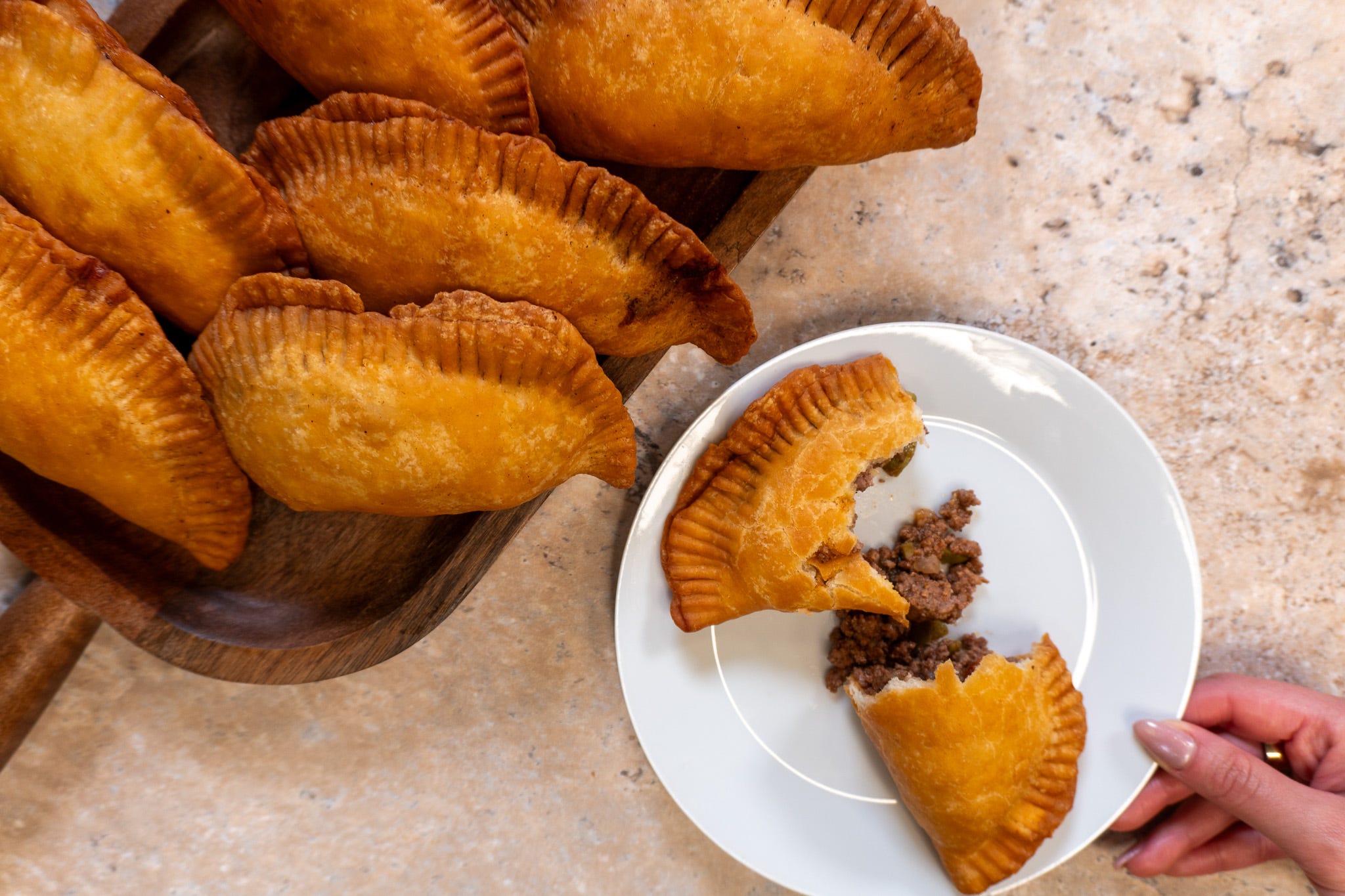
Welcome back to the 6th installment of making every empanada across Latin America, and today we’re doing a deep dive on Cubaaa. 🇨🇺 If you’ve been following this series, you already know every country brings something completely different to the table, and Cuba is no exception.
Cuban empanadas are fried, flaky, and stuffed with picadillo, a seasoned ground beef filling that is among the most beloved dishes in Latin American and Caribbean cooking. Picadillo originates in Spain, and versions of it can be found across Latin America, the Caribbean, and as far as the Philippines. The Cuban version is distinct for its combination of olives, olive juice, and raisins running through the beef, which gives you this layered flavor that’s savory, briny, slightly spiced, and a little sweet all at once.


Now…are the raisins optional? With my family growing up in Miami, I had Cuban empanadas constantly, and there is genuinely a divide between people who add raisins and people who absolutely do not. I was in the no-raisins camp for most of my life. I thought I just preferred the straight savory filling. But somewhere along the way, my palate caught up, and now I fully appreciate those little sweet bites against all that briny olive and spiced beef. I included them here because I think they make the filling more interesting, but you can leave them out, and it’s still a really excellent empanada.


Miami’s Little Havana has been turning out millions of these little pies for decades, and growing up around that food shaped how I understand Cuban flavors. This recipe is my version of what I grew up eating.
The dough here is different from the Chilean empanada we made in Part 5. With cold butter worked into the flour and fried instead of baked. The result is a flaky, crispy, golden shell that shatters a little when you bite into it.
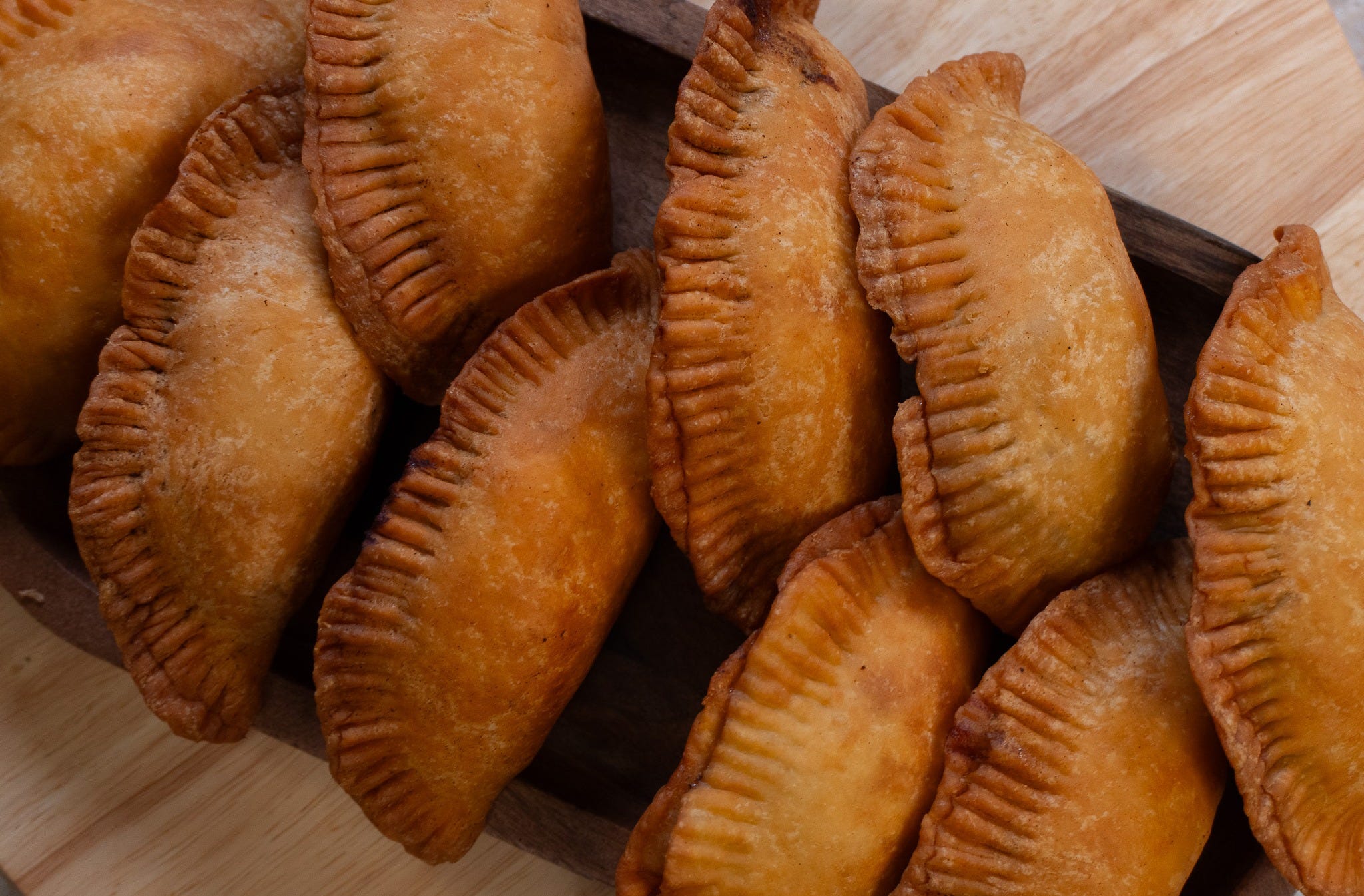
A note on the dough: traditionally, Cuban empanada dough is made with lard, which gives it its signature flaky, slightly rich texture. Lard has a higher fat content than butter and a lower water content, which means it creates more distinct layers in the dough when it fries. For this recipe, I used butter as a more accessible swap, but if you can get your hands on lard or vegetable shortening, either works here and will get you closer to the traditional result.

Makes 12 empanadas
Empanada Dough
3 cups + 1 tbsp all-purpose flour
1 tsp baking powder
1¼ tsp salt
2½ tsp cane sugar
4 tbsp unsalted butter
1⅔ cups water
Picadillo Filling
2 lbs ground beef
½ onion, diced
½ green bell pepper, diced
2 tomatoes, diced
5 cloves garlic, minced
1¾ tsp salt
2 tsp black pepper
1 tsp cumin
1 tsp oregano
¼ tsp cinnamon
4 tbsp tomato paste
¼ cup beef stock or water
6 green olives, chopped
¼ cup olive juice
½ cup raisins
For Frying
3 cups neutral oil
Paid subscribers get access to the full recipe archive and downloadable recipe cards on select recipes. Join below.



Make the picadillo filling
Heat oil in a caldero or wide pan over medium-high heat.
Add the diced onion and green bell pepper and cook until softened, about 5 minutes.
Add the minced garlic and cook for one more minute until fragrant.
Add the ground beef and break it up as it cooks until browned all over.
Add salt, black pepper, cumin, oregano, and cinnamon. Stir well to evenly coat the meat with the spices.
Add the diced tomatoes and stir to combine. Cook for 2-3 minutes until the tomatoes start to break down.
Add the tomato paste and stir until fully incorporated into the beef mixture.
Pour in the beef stock or water and stir to bring everything together.
Let the filling simmer over medium-low heat for 10-12 minutes until the liquid has mostly absorbed and the filling is cohesive but not dry.
Fold in the chopped olives, olive juice, and raisins, then remove from the heat.
Let the filling cool completely before assembling. Hot filling will steam the dough from the inside, preventing it from frying up crispy.
Make the dough
Combine flour, baking powder, salt, and sugar in a large bowl, whisking until well combined.
Add the butter and work it into the flour with your fingertips until the mixture resembles coarse crumbs.
This is the same technique as making a pie crust. The small pieces of butter distributed throughout the flour create those flaky layers when the dough hits the hot oil.
Add the water gradually and mix until a dough comes together. It should be smooth and pliable but not sticky.
Cover and let rest for 20 minutes.
Divide the dough into 12 equal portions, each about 70 grams.
Shape and fill
Working one at a time, roll each dough ball into as even a circle as possible, about ⅛ inch thick. If you want perfectly round circles, use a large cup or bowl to cut the shape.
Add 2½ tbsp of picadillo filling in the center of the circle.
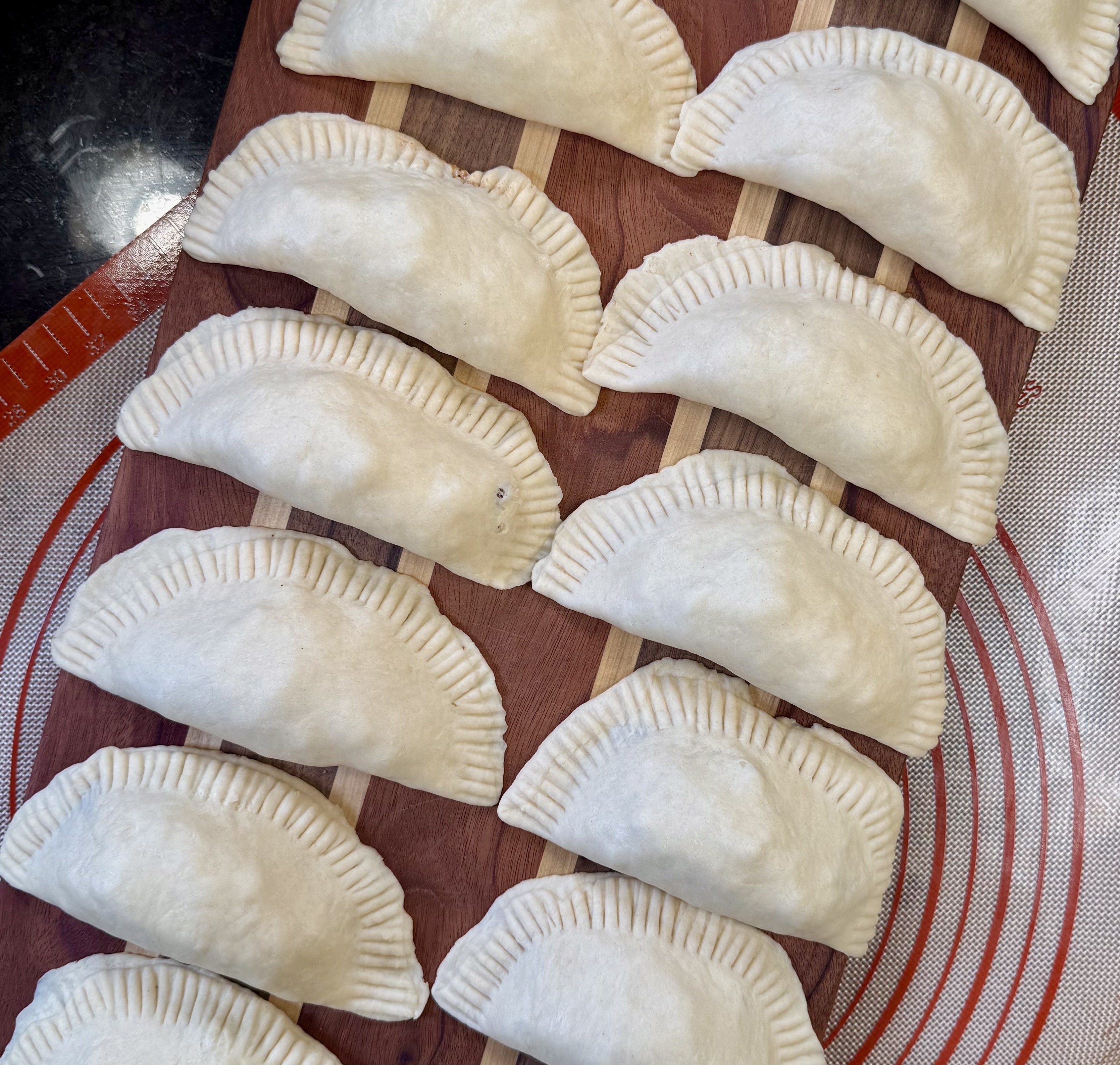
Fold the dough over the filling to form a half-moon shape.
Press the edges firmly together to seal. Then crimp all the way around with a fork, pressing down firmly at each point. The crimped seal is the traditional Cuban closure, and it also ensures no filling escapes into the oil.
Fry
Heat oil in a deep pan to 350°F.
Fry empanadas in batches of 3-4, leaving space between each one.
Fry for 2-3 minutes, turning halfway through, until deeply golden and crispy all over.
Drain on a wire rack and serve immediately.

My filling is too wet for assembling. It needed more time to reduce. The filling should hold its shape when scooped. If it’s still loose and saucy, keep simmering uncovered until the liquid has absorbed.
My empanadas are opening up in the oil. The seal wasn’t tight enough. Press the edges firmly together before crimping, and make sure the fork presses through both layers of dough at every point.
My dough is tough instead of flaky. The butter wasn’t worked in well enough, or the dough was overworked after the water was added. Work the butter in until you see coarse crumbs, then add any liquid and stop mixing as soon as the dough comes together.
My empanadas are greasy instead of crispy. The oil wasn’t hot enough. If the temperature drops too low between batches, the dough absorbs oil rather than crisping quickly. Let the oil return to 350°F between rounds, and fry in smaller batches.
I hope you try this recipe! Please tag me if you do!
instagram: @hennasharee
youtube: @hennasharee
tiktok: @hennashareee
What are the best kind tomatoes to use?